The Anatomy and Appeal of Skipping Jigs: Design, Function, and Color Strategy
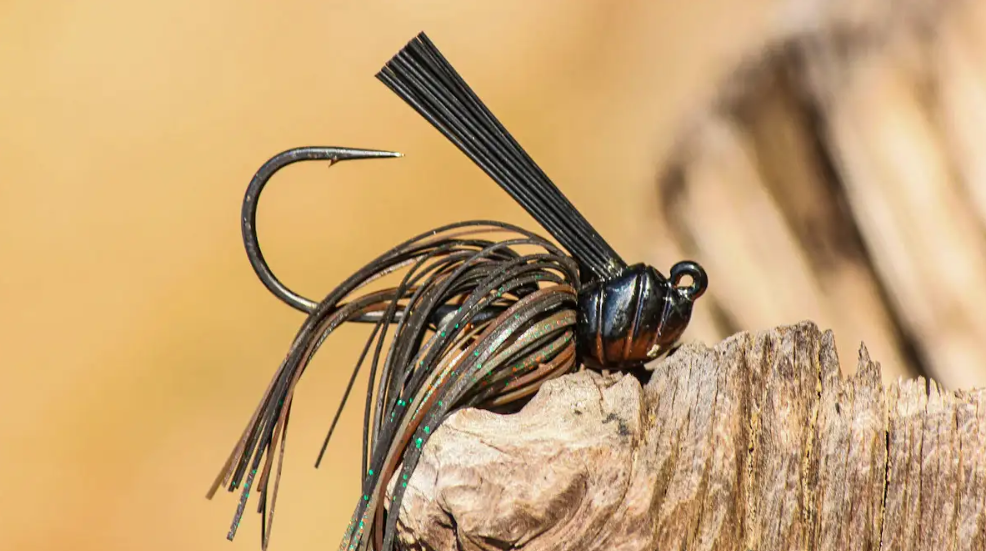
Skipping jigs are specifically designed for fishing under overhead cover—such as boat docks, overhanging branches, or other hard-to-reach areas. To fulfill this purpose effectively, high-performing skipping jigs share several common design features that allow them to glide smoothly across the water’s surface and maneuver efficiently through heavy cover.
These jigs typically feature a distinct head shape: the line tie (eye) is positioned horizontally, and the head has a slightly scooped or shovel-like profile, with most of its weight concentrated on a flat, planing surface at the bottom. A medium-sized weedguard extends forward from the head to shield the hook point—offering snag resistance without compromising hook-setting ability. Most skipping jigs are fitted with a strong, round-bend hook. Molded directly onto the hook shank is a soft-plastic trailer keeper, which securely holds soft plastic trailers in place. Finally, a rubber or silicone skirt is tightly secured around the collar of the jig head to complete the presentation.